
 Latest & News
Choosing between a ridge vent vs box vent setup might sound like a small detail, but in a cold climate it can decide how long your roof lasts. Attic vents control heat and moisture above your ceiling all year long. When they work well, shingles last longer, ice dams are less likely and the attic stays dry. When they do not, problems build up quietly until they show up as stains, frost or early shingle wear.
This guide explains how ridge vents and box vents work, how they compare in snowy Wisconsin winters and which option fits different roof shapes. It also covers the one mistake that can make any vent system work against itself.
Why Attic Ventilation Matters in Cold Climates
Good attic ventilation keeps the roof deck close to the outdoor temperature. In winter, that stops heat from inside the house from warming the roof and melting snow, which is the main cause of ice dams along the eaves. It also clears out the warm, moist air that rises from bathrooms, kitchens and everyday living.
Without enough airflow, that moisture condenses on the cold underside of the roof deck and turns into frost. When the frost melts, it soaks the insulation and wood, which can lead to mold and rot. That is why roof ventilation for cold climates is not optional. It is a key part of how the whole roof system works.
How Ridge Vents Work
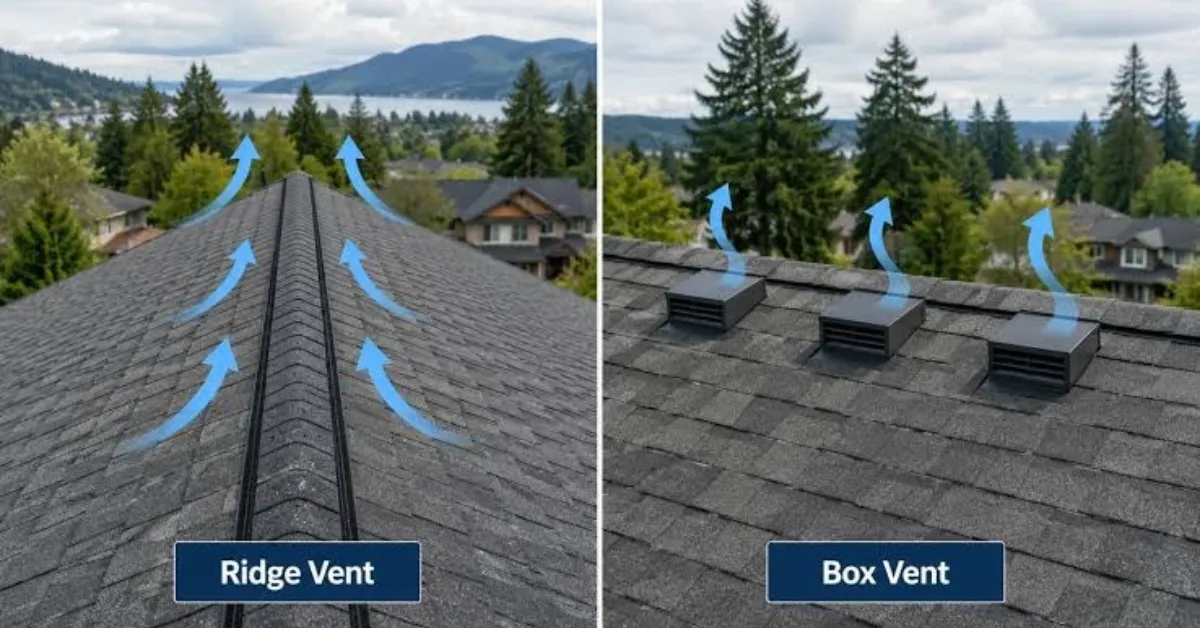
A ridge vent runs along the peak of the roof, where two slopes meet. Installers cut a narrow slot through the roof deck along the ridge, then cover it with a low-profile vent that is capped with shingles. Warm air rises through the attic and escapes along the entire length of the peak.
Because the vent stretches across the whole ridge, it pulls air evenly from every part of the attic. Most modern ridge vents also have built-in baffles and filter material that help block wind-driven rain and snow. From the street, a ridge vent blends into the roofline, so it is almost invisible once the roof is finished. That even, quiet airflow is the biggest point in its favor in any ridge vent vs box vent comparison.
How Box Vents Work
Box vents, sometimes called static vents or louver vents, are square or rectangular vents installed near the top of the roof. Each one sits over a hole cut through the roof deck, and several are usually spread out across the upper part of the roof. Warm air rises and exits through each opening on its own.
Static roof vents like these have no moving parts and cost less per unit than a full ridge vent. They work well on roofs with very short ridges, such as hip roofs, where there is not enough ridge length for a ridge vent to move enough air. The downside is that they vent only the areas right around each opening, which can leave pockets of trapped air in other parts of the attic. That spot-by-spot airflow is the main tradeoff in a ridge vent vs box vent decision.
Ridge Vent vs Box Vent | Comparing Airflow and Performance
When you compare a ridge vent vs box vent on airflow, the ridge vent usually wins on a standard gable roof. It creates one continuous exhaust line, so air moves evenly from the soffits at the eaves up to the peak. Box vents create several smaller exhaust points, and the spaces between them can stay warmer and damper.
Box vents still have their place. On hip roofs, complex rooflines or homes with short ridges, a set of well-placed box vents can provide the exhaust a ridge vent cannot. The right answer depends on your roof shape, attic size and how much intake you have at the eaves. Either way, the system only works if cold air can enter low through soffit vents and leave high through the exhaust.
Snow, Ice Dams and Wind in Wisconsin Winters
Wisconsin roofs can sit under deep snow for weeks. Ridge vents with external baffles are designed to keep snow from blowing into the attic, but heavy snow can still cover the vent for a time. Box vents can get buried too, especially on lower-pitch roofs. In both cases, a balanced system with plenty of soffit intake keeps air moving even when part of the exhaust is under snow, so intake should always be part of the ridge vent vs box vent choice.
Ventilation is also a big part of preventing ice dams. A cold, well-vented roof melts snow evenly instead of melting high and freezing at the edge. If ice dams are a problem at your home, our guide to ice dams in northern Wisconsin explains how ventilation and ice barrier work together. AGP Drywall checks intake and exhaust on every roof replacement so the new roof can handle these conditions.
Why You Should Not Mix Exhaust Vent Types
One of the most common ventilation mistakes is using a ridge vent and box vents on the same roof. It sounds like more vents would mean more airflow, but the opposite can happen. The box vent closest to the ridge can start pulling air in from outside instead of from the soffits, short-circuiting the system.
When that happens, the lower part of the attic gets little or no fresh air, and moisture and heat build up there. The best approach is to choose one exhaust type and pair it with enough soffit intake. This kind of balanced ventilation usually means about the same amount of open vent area low on the roof as high on the roof. During a tear-off, old box vents are often removed and the openings are covered with new decking when a ridge vent is installed.
How to Choose the Right Vent for Your Roof
For most gable roofs in Wisconsin, the ridge vent vs box vent question has a clear answer: a ridge vent paired with clear soffit vents is the best choice. It gives even airflow, a clean look and good protection against wind-driven snow. For hip roofs or roofs with short ridges, box vents or a mix of hip ridge vents and box vents may be needed to reach enough exhaust.
A common building code guideline calls for 1 square foot of net free vent area for every 150 square feet of attic floor, or 1 for every 300 square feet when vents are balanced between high and low. A roofer should measure your attic and check your soffits before deciding. The crew at AGP Drywall looks at the attic during every estimate and recommends the vent setup that fits your roof shape.
Frequently Asked Questions
Which is better for a cold climate, a ridge vent or box vents?
On most gable roofs, a ridge vent works better because it pulls air evenly along the entire peak. Box vents can be the better choice on hip roofs or roofs with short ridges.
Can I have both a ridge vent and box vents?
It is not recommended. Mixing exhaust types can cause air to short-circuit between vents, leaving parts of the attic without proper airflow.
Do ridge vents let snow into the attic?
Quality ridge vents have baffles and filter material that block most blowing snow. Proper installation and balanced intake also help keep snow out.
How many box vents does a roof need?
It depends on the attic size and the vent area of each box vent. Most homes need several, spaced evenly near the top of the roof, along with enough soffit intake.
Should vents be updated during a roof replacement?
Yes. A full roof replacement is the best time to correct ventilation problems, remove old vents and install a balanced system that matches your attic.
Get the Right Ventilation on Your Next Roof
Your roof can only last as long as the attic beneath it allows. AGP Drywall checks ventilation, intake and exhaust as part of every roof installation we complete across central and northern Wisconsin. Call (715) 393-9680 to schedule a free roof estimate and find out which vent setup is right for your home.
