
 Blog
Ice dams northern Wisconsin homeowners deal with every winter are not just a cosmetic problem. That thick ridge of ice along the roof edge can push melting snow under your shingles, soak the roof deck and leave water stains on ceilings and walls. Once you understand how they form, it becomes much easier to stop them at the source.
This guide explains why ice dams are so common in the Northwoods, the warning signs to watch for, and the roof installation details that keep them from coming back. It also covers what you can do safely right now if your roof already has ice built up along the eaves.
What an Ice Dam Is and How It Forms
An ice dam is a ridge of ice that builds up along the lower edge of a roof. It starts when heat from inside the house warms the upper part of the roof deck above 32 degrees. The snow sitting on that warm area melts, and the water runs down the roof until it reaches the eaves, which hang out past the warm walls and stay cold.
At the cold eaves, the water freezes again. Day after day, the ice grows thicker and taller until it forms a dam. Fresh meltwater then pools behind it with nowhere to go, and it slowly backs up under the shingles. Shingles are built to shed water running downhill, not to hold back standing water, so that is when leaks start.
Why Ice Dams Northern Wisconsin Homes See Are So Common
Northern Wisconsin has the perfect setup for ice dams. Long winters, deep snow cover and frequent swings between sunny afternoons and freezing nights keep the melt and refreeze cycle going for months. Homes in Rhinelander, Minocqua, Tomahawk and the rest of the Northwoods often hold snow on the roof from December into March.
Older homes add to the problem. Many houses in the region were built with thin attic insulation, little or no air sealing and attic vents that are blocked or too small. Warm air from the living space leaks into the attic, heats the roof deck and feeds the exact melting that causes ice dams northern Wisconsin families end up fighting every year.
Warning Signs Your Roof Has an Ice Dam Problem
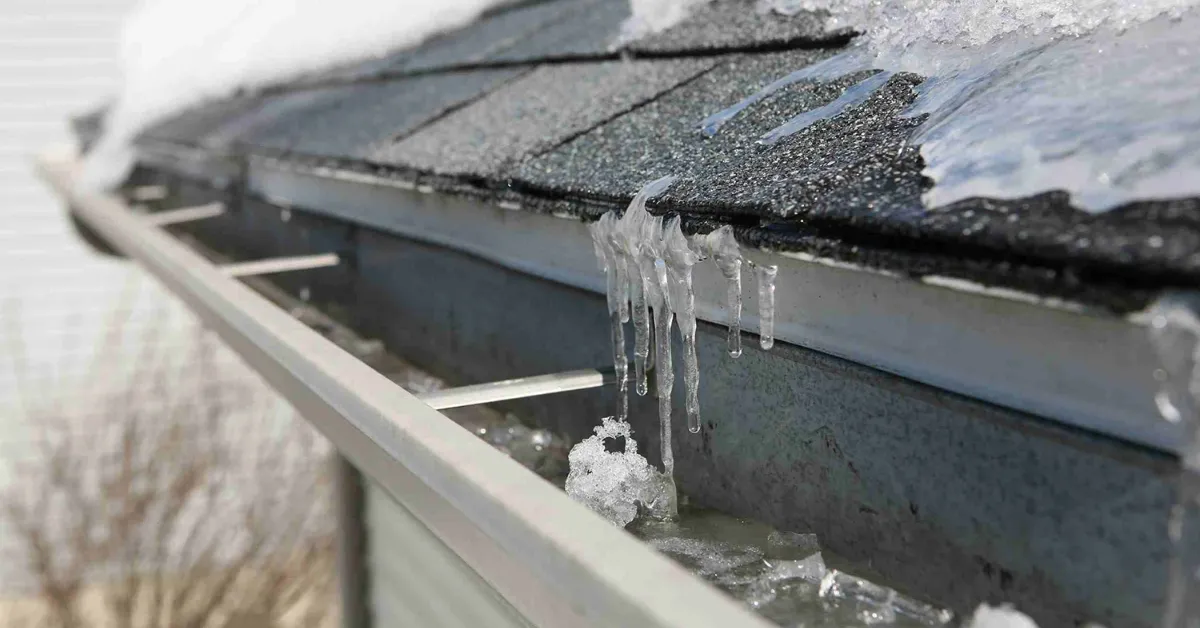
The easiest sign of ice dams northern Wisconsin roofs develop is a row of large icicles hanging from the gutters or roof edge. A few small icicles are normal, but thick, heavy icicles and a solid band of ice along the eaves usually mean water is melting higher on the roof and refreezing at the edge. You may also notice bare spots on the upper roof while the lower edge stays loaded with snow and ice.
Inside the house, look for water stains on ceilings near outside walls, peeling paint around windows, or damp spots in closets along the exterior. In the attic, frost on the underside of the roof deck or wet insulation is a strong clue. These signs mean the roof is losing heat and water is already getting in where it should not.
The Damage Ice Dams Leave Behind
Water that gets under shingles soaks into the roof deck, the attic insulation and eventually the drywall below. Wet insulation loses its ability to hold heat, which makes the ice dam problem worse the next winter. Over time, the wood decking can soften and rot, and mold can start growing in a damp attic.
Left alone, the ice dams northern Wisconsin homes face each year also put heavy weight on gutters and the roof edge. Gutters can bend or pull away from the fascia, and the shingles along the eaves can lift or crack from repeated freezing. When this damage spreads across several winters, the roof often reaches the point where a full replacement is the only long-term answer.
How Proper Roof Installation Stops Ice Dams
The most important layer for ice dam prevention sits under the shingles. Ice and water shield is a self-sealing rubberized membrane that bonds directly to the roof deck and seals around every nail. Building codes for cold climates like Wisconsin call for this ice barrier from the roof edge to at least 24 inches inside the exterior wall line. Many crews in the Northwoods run it even higher and add it in every valley, since those are the spots where water backs up first.
Drip edge, flashing and the shingles themselves also play a role. Metal drip edge directs water into the gutters instead of letting it curl back toward the fascia. Step flashing and counter flashing around chimneys and walls keep water from slipping in at the joints. When AGP Drywall installs an asphalt shingle roof, every one of these layers goes on in the right order, because a roof is only as strong as its weakest seam.
Why Attic Ventilation Matters for Ice Dam Prevention
Even the best underlayment cannot save a roof that is warm on top and cold at the edge. Proper attic ventilation keeps the roof deck closer to the outdoor temperature, so snow melts evenly instead of melting high and freezing low. A balanced system pulls cold air in through soffit vents at the eaves and lets warm, moist air escape through ridge vents at the peak.
Ventilation works best when the attic floor is also sealed and insulated. Gaps around light fixtures, attic hatches, plumbing stacks and bath fans let warm air rush into the attic. Sealing those gaps and adding insulation keeps heat in the living space where it belongs. When a roof installation in northern Wisconsin is planned together with good airflow and insulation, the conditions that create ice dams mostly disappear.
What to Do if You Already Have an Ice Dam
If your roof already has one of the ice dams northern Wisconsin winters are known for, start by pulling snow off the lower few feet with a long-handled roof rake while standing safely on the ground. Less snow means less meltwater feeding the dam. Never climb onto an icy roof, and avoid chipping at the ice with a hammer, shovel or ice pick, since that can tear shingles and damage the roof edge.
Some homeowners fill a stocking with calcium chloride and lay it across the dam to melt a channel for water to drain. Avoid rock salt, which can harm shingles, gutters and plants. These steps only buy time. If ice dams return every winter, the real answer is a roof built with the right ice barrier and ventilation, along with better attic insulation.
When a Full Roof Replacement Makes Sense
If your roof is 20 years or older, has damaged decking from years of ice dams or was installed without a proper ice barrier, replacing it is often smarter than chasing leaks every spring. A full tear-off lets the crew see every board, replace soft decking and install new ice and water shield, underlayment and flashing from the ground up.
A new roof also gives you the chance to correct ventilation problems that have been building for decades. The team at AGP Drywall inspects the attic, checks intake and exhaust airflow and plans every asphalt roof replacement around the conditions northern Wisconsin roofs face each winter. Done right, the new roof sheds snow and meltwater the way it was designed to.
Frequently Asked Questions
Are ice dams covered by homeowners insurance?
Many policies cover sudden water damage inside the home caused by ice dams, but they usually do not cover the ice dam itself or long-term wear. Coverage varies, so check your policy and call your agent before winter.
Do heated roof cables stop ice dams?
Heated cables can melt drainage channels through the ice, but they do not stop the heat loss that causes ice dams in the first place. They also add to your electric bill. Good insulation, ventilation and a proper ice barrier work better over the long run.
Can a new roof be installed in winter in Wisconsin?
Yes. Asphalt shingle roofs can be installed in cold weather with extra care. Crews often hand-seal shingles in low temperatures so they bond properly until warmer weather fully seals them.
How much ice and water shield does my roof need?
Code calls for coverage from the roof edge to at least 24 inches inside the exterior wall line. In northern Wisconsin, many roofs benefit from extra rows at the eaves, full coverage in valleys and protection around chimneys and skylights.
Will more attic insulation stop ice dams on its own?
Insulation helps a lot, but it works best together with air sealing and balanced ventilation. Without airflow, warm moist air can still collect in the attic, heat the roof deck and lead to frost and ice buildup.
Stop Ice Dams Before Next Winter
If your home fights ice dams northern Wisconsin winters bring every year, the roof itself may be the weak point. Call AGP Drywall at (715) 393-9680 to schedule a free roof inspection. As an asphalt roofing contractor Wisconsin homeowners trust, our crew installs new asphalt shingle roofs and full replacements with the ice barrier, flashing and ventilation northern winters demand.
