 Blog
BlogIf you plan to paint over drywall after applying joint compound, patience matters. Painting too soon can trap moisture and lead to an uneven finish, poor paint coverage, or visible surface differences. Knowing when the compound is actually dry helps create a cleaner starting point for primer and paint.
For homeowners in Rhinelander, WI, the drying process can also change with indoor temperature, humidity, airflow, and how thickly the compound was applied. This guide explains what to look for before you paint, how primer fits into the process, and how to prepare the surface for a consistent finish.
How Long Should You Wait Before You Paint Over Drywall?
In normal indoor conditions, the joint compound often needs about 24 hours to dry before the next finishing stage. However, this is not a fixed rule. Cooler temperatures, higher humidity, poor airflow, or thicker applications can make the drying process take longer.
A better approach is to check the surface rather than relying only on the clock. The compound should look and feel consistently dry, with no darker or damp areas remaining. USG also advises that applied joint compound should be thoroughly dry and dust free before painting or other decorative finishes.
If the compound was applied in several coats, allow each coat to dry properly before moving forward. Rushing one stage can affect the appearance of the final wall.
What Factors Can Change Drying Time?
Several conditions can make joint compounds dry faster or slower. Understanding these factors can help you plan your painting schedule without guessing.
Temperature and Humidity
Warm, reasonably dry indoor conditions generally support faster drying. Cold rooms and high humidity slow moisture evaporation, so a wall that normally dries within a day may need additional time.
In Wisconsin homes, seasonal conditions can make indoor humidity especially important. Keep the room at a comfortable temperature and provide reasonable airflow while the compound dries.
Thickness and Application
A thin, even coat usually dries more quickly than a heavy application. Areas with thicker compounds can remain damp underneath even when the surface appears dry.
Look closely at corners, seams, fastener areas, and any spots where compound was applied more heavily. These areas may need extra drying time before you continue.
How Can You Tell When the Wall Is Ready for Primer?
Knowing when to paint over drywall starts with knowing when the surface is ready for primer. A simple inspection can help you avoid moving forward too early.
First, look across the wall under normal room lighting. The compound should have a consistent appearance without obvious dark or damp-looking sections.
Next, lightly check the surface according to the product manufacturer’s recommendations. It should not feel soft, cool, or damp in areas where the compound was applied.
Finally, make sure sanding and cleaning are complete. Dust left behind from sanding can interfere with primer adhesion and create a rougher final appearance.
For homeowners considering different surface finishes, AGP Drywall’s guide to painted wall textures also explains how lighting, room use, and texture selection can affect the finished appearance.
Why Is Primer Important Before Painting Drywall?
Primer helps create a more uniform surface because bare drywall and areas covered with joint compound can absorb paint differently. Without proper preparation, those differences may become visible after the final paint is applied.
USG explains that drywall primer is designed to help equalize differences in surface texture and porosity between the drywall face paper and joint compound. This can help reduce visible differences in the finished coating.
For new or freshly finished drywall, choose a primer that is appropriate for the substrate and follow the product label. Apply it evenly and allow it to dry according to the manufacturer’s instructions before applying the finish coat.
When you are ready for professional drywall painting in the Rhinelander area, explore AGP Drywall’s drywall painting services for the next step.
What Steps Should You Follow Before Painting?
A simple preparation sequence can make the painting process easier and more predictable.
- Allow the compound to dry: Give the surface enough time based on temperature, humidity, thickness, and product instructions.
- Inspect the wall: Look for damp areas, uneven spots, visible lines, or surface imperfections.
- Sand carefully: Smooth the finished compound without unnecessarily damaging the drywall face paper.
- Remove dust: Wipe away sanding dust so the surface is clean before priming.
- Apply suitable primer: Use a primer designed for drywall or the specific surface according to manufacturer directions.
- Let the primer dry: Follow the primer label for the correct recoat time.
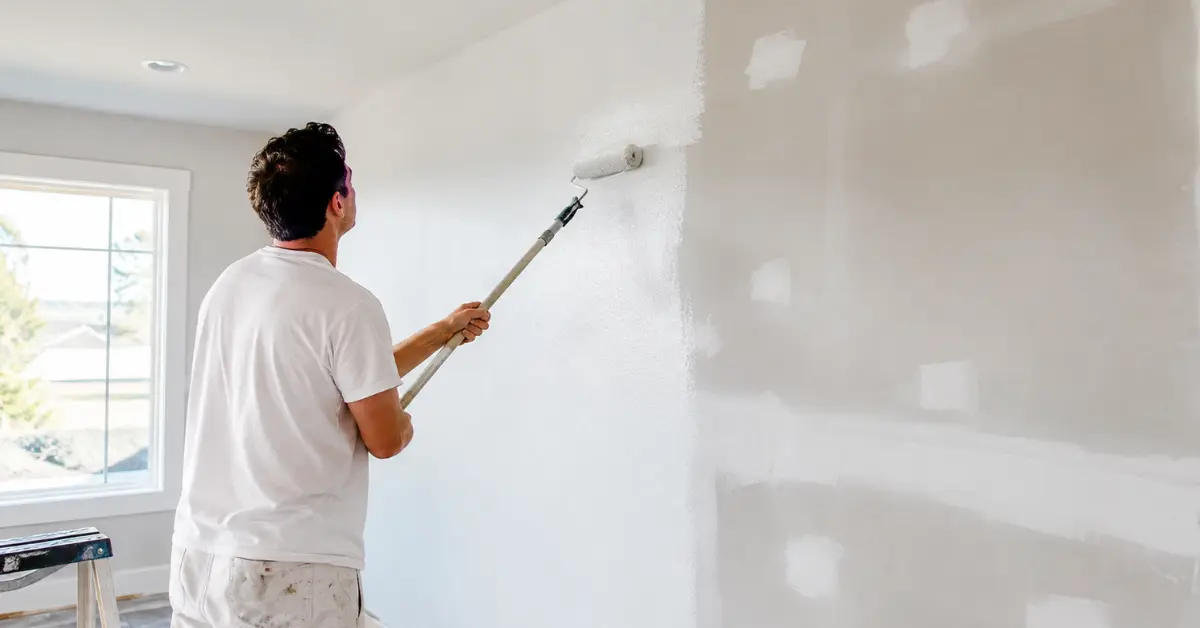
- Apply paint: Use the appropriate roller, brush, or spray method for the selected paint.
- Inspect the finish: Check the wall from different angles and under normal room lighting.
This process supports the basic preparation sequence recommended for drywall finishing and painting.
Can You Speed Up the Drying Process?
You can support normal drying, but forcing the process too aggressively is not a substitute for allowing the compound to dry thoroughly.
Maintain a comfortable indoor temperature and provide reasonable ventilation or airflow. Avoid creating excessive heat directly against one small section of the wall because the surface may dry differently from deeper material.
A fan can help move air through the room, especially when indoor humidity is elevated. The goal is consistent drying throughout the space rather than simply making the outer surface feel dry.
If you are unsure whether the compound has fully dried, waiting longer is generally safer than applying primer too early.
What Happens If You Paint Too Soon?
Painting before the joint compound is thoroughly dry can create several appearance and adhesion concerns. Moisture beneath the coating can interfere with the finishing process, while differences in surface porosity can make some areas absorb paint differently.
You may notice uneven sheen, inconsistent color, visible compound areas, or a finish that does not look uniform under strong lighting.
This is particularly noticeable on large walls, near windows, or under bright ceiling fixtures. Taking additional time during preparation can help prevent those issues from becoming visible after the room is painted.
How Does Rhinelander Weather Affect Drywall Painting?
Rhinelander homeowners should consider indoor conditions rather than outdoor temperature alone. Cold weather can mean a home has less natural ventilation, while indoor humidity can vary depending on heating, cooking, bathing, and general household activity.
Homes around Downtown Rhinelander, properties near the area’s lakes, and residences throughout the surrounding community can have different indoor conditions. That means the same joint compound may not dry at exactly the same speed in every home.
AGP Drywall serves Rhinelander and surrounding Wisconsin communities. Its published business information lists Monday through Friday hours of 8:00 a.m. to 5:00 p.m., Saturday hours of 9:00 a.m. to 5:00 p.m., and Sunday hours of 10:00 a.m. to 5:00 p.m. The company also states that text inquiries are usually answered within a few minutes.
For project questions or an estimate, call (715) 393-9680. AGP Drywall’s listed business address is 1010 E 9th St Merrill, WI 54452.
How Can You Get a Smooth Finish When You Paint Over Drywall?
The key is to treat drying, sanding, cleaning, priming, and painting as separate stages rather than trying to complete everything as quickly as possible.
Give the joint compound enough time to dry based on the actual room conditions. Then inspect the wall, sand it carefully, remove dust, and apply an appropriate drywall primer. Once the primer has dried according to its instructions, apply the selected paint.
For homeowners in Rhinelander, careful preparation can make a major difference in how the finished wall looks. If you want professional help with drywall painting and priming, AGP Drywall provides drywall painting services for homes in the area.
Frequently Asked Questions
How long should drywall compound dry before painting?
Joint compound commonly needs around 24 hours to dry under favorable indoor conditions, but the actual time varies. Higher humidity, lower temperatures, thicker applications, and limited airflow can extend drying. Always follow the product manufacturer’s instructions and confirm that the compound is thoroughly dry before sanding, priming, or painting.
Can I paint drywall without using primer?
Primer is strongly recommended for new drywall and areas containing fresh joint compound because these surfaces can absorb paint differently. A suitable drywall primer helps create more consistent surface porosity and can improve the uniformity of the finished coating. Follow the primer and paint manufacturer’s instructions for the specific products you choose.
What is the typical cost of drywall painting?
The price depends on factors such as wall size, surface condition, preparation requirements, number of rooms, primer, paint, texture, and the desired finish. Because every project is different, a project specific estimate is more useful than relying on a general price range.
How long does drywall painting take?
Timing depends on the size of the project and how much preparation the walls require. Drying time for joint compound and primer also affects the schedule. A small room may move through the process more quickly than several rooms, while high humidity or cool indoor conditions can add drying time.
Does AGP Drywall serve homeowners in Rhinelander?
Yes. AGP Drywall lists Rhinelander among its service areas and provides drywall painting and related drywall services for homeowners in the region. The company is based in Merrill, Wisconsin, and serves Rhinelander and surrounding communities.
What should be included before painting drywall?
The surface should be properly finished, fully dry, smooth, and free from sanding dust. The usual sequence includes checking the surface, sanding as needed, cleaning away dust, applying appropriate primer, allowing the primer to dry, and then applying the selected paint according to the manufacturer’s instructions.
Why should homeowners consider professional drywall painting?
Professional painting can help when you want the preparation, priming, and finishing stages handled as one coordinated process. AGP Drywall’s published service information describes drywall painting, priming, color options, and painting for new homes, remodels, and basement finishing projects.
