 Blog
BlogRemoving paint from drywall sounds simple, but drywall has a paper facing that can be damaged when paint is scraped, sanded, or pulled away too aggressively. The goal of removing paint is not simply to get every layer off. It is to create a stable, smooth surface that is ready for the next stage of the project.
For homeowners in Merrill, understanding the difference between aggressive paint removal and careful surface preparation can help protect the wall and produce a better final finish. If the existing coating is firmly bonded, complete removal may not even be necessary. Sherwin-Williams notes that old paint generally does not need to be stripped unless it is peeling, bubbling, or incompatible with the new coating.
Why Does Removing Paint from Drywall Damage the Surface?
Removing paint from drywall can expose or tear the paper face when excessive force is used. Unlike metal or many wood surfaces, drywall is not designed to withstand aggressive scraping or deep sanding.
Paint may also be bonded tightly to the drywall surface. When someone forces a scraper underneath a firmly attached coating, the tool can pull at the paper layer along with the paint.
Several factors can increase the risk:
- Using a sharp scraper at too steep an angle
- Applying excessive pressure
- Sanding too deeply
- Using coarse abrasives for too long
- Pulling loose paint before determining how firmly it is attached
- Using unsuitable chemical products on a porous drywall surface
The safer objective is to remove only what needs to come off while keeping the underlying drywall surface intact.
What Is the Safest Approach to Paint Removal from Drywall?
The safest approach is to evaluate the existing coating first, remove only loose or failing paint, and use controlled scraping and light sanding rather than aggressive methods. The drywall should then be cleaned, allowed to dry, and properly primed before a new paint system is applied.
Before starting, test a small, inconspicuous area. This reveals how strongly the existing coating is bonded and whether the surface underneath can tolerate the selected technique.
Sherwin-Williams also warns that sanding, scraping, or other removal methods can generate dust or fumes containing lead when older coatings are involved. Appropriate precautions and local guidance are important when lead may be present.
Start With a Small Test Area
Choose a small section and gently test the paint with a suitable scraper. Watch the drywall surface rather than focusing only on the paint.
If the paper begins lifting, stop and change the approach. A small test can prevent unnecessary damage across an entire wall.
Avoid Treating Drywall Like Metal or Wood
Some paint removal techniques are designed for harder materials. Heat guns, aggressive sanding, and certain chemical strippers may be appropriate for specific surfaces, but drywall requires much more control.
The material underneath the paint should always determine the method.
Which Paint Removal Methods Work Best for Drywall?
Different drywall paint removal methods carry different levels of risk. The best choice depends on the condition of the coating and the surface underneath it.
For lightly peeling areas, controlled scraping followed by careful smoothing may be enough. For firmly bonded paint, complete stripping may create more problems than it solves.
Controlled Scraping
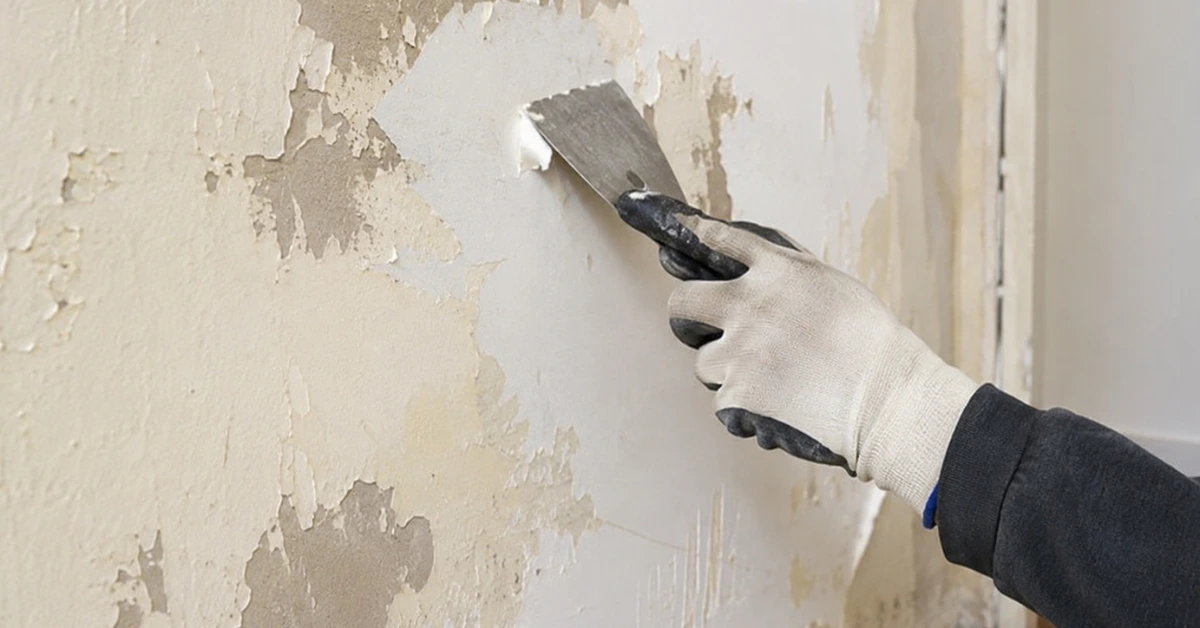
Hold the scraper at a shallow angle and work in small sections. Use steady pressure instead of forcing the blade beneath the coating.
The objective is to remove loose material without cutting into the drywall paper.
Light Sanding
Once loose paint has been removed, light sanding can help smooth the transition between painted and exposed areas. Avoid repeatedly sanding the same location because drywall paper can become exposed surprisingly quickly.
A fine or appropriate drywall sanding method is generally more suitable than aggressive abrasion.
Chemical Strippers and Heat
Chemical strippers and heat-based methods require extra caution. Sherwin-Williams describes paint stripper and heat-gun techniques for paint removal, but its guide discusses these methods broadly across different surfaces rather than specifically recommending them for drywall.
For drywall, using a less aggressive preparation method is often preferable when the goal is to preserve the substrate for a new finish.
How Can You Prepare Drywall After Paint Removal?
After removing loose or unwanted paint, the next priority is creating a clean, stable surface. Do not immediately apply a new topcoat while dust, residue, loose fibers, or uneven areas remain.
A practical preparation sequence is:
- Remove loose paint carefully.
- Smooth transitions between remaining paint and exposed areas.
- Remove sanding dust from the surface.
- Allow the wall to become completely dry.
- Evaluate absorption and surface uniformity.
- Apply an appropriate drywall primer.
- Allow the primer to dry according to the manufacturer’s instructions.
- Inspect the primed surface before applying the final paint.
Proper preparation matters because drywall and joint compound can absorb coatings differently. AGP Drywall’s existing guidance on primer paint for new drywall explains why sealing porous drywall helps create more uniform paint coverage.
What Mistakes Should You Avoid When Removing Old Paint from Walls?
The biggest mistake is assuming that stronger methods always produce better results. With drywall, aggressive work can make the surface less suitable for the new finish.
Avoid these common mistakes:
- Scraping firmly bonded paint with excessive force
- Using very coarse sandpaper over large areas
- Continuing to sand after the drywall paper becomes visible
- Applying water or chemicals without considering drywall’s porous surface
- Painting over dust
- Skipping primer after substantial surface preparation
- Assuming every wall needs complete paint removal
Sherwin-Williams specifically notes that complete removal is not always necessary when existing paint is sound and compatible with the planned new coating.
This approach can save time while protecting the surface for the next coat.
How Does Proper Priming Protect the Final Paint Finish?
Primer provides an important transition between the prepared drywall surface and the new paint. Fresh or exposed drywall can absorb paint unevenly, which may lead to inconsistent color and sheen.
AGP Drywall explains that primer helps seal porous drywall and create a more uniform base before painting.
For projects involving substantial surface preparation, primer can also help reveal areas that need additional attention before the final paint is applied.
Prepare Your Walls for a New Finish with AGP Drywall’s drywall painting solutions.
How Can Merrill Homeowners Get Better Results From Drywall Paint Preparation?
Local conditions and the existing wall surface both matter when preparing drywall for a new finish. For homeowners in Merrill, the project should be approached according to the condition of the drywall, existing coating, room environment, and selected paint system.
AGP Drywall is based out of Merrill, Wisconsin, and lists (715) 393-9680 as its business phone. Its service information includes drywall priming and drywall painting for projects that need a clean, uniform finish.
For broader project planning, homeowners can also review AGP Drywall’s drywall and painting solutions to understand how drywall preparation and painting can work together.
No specific response-time guarantee or special certification is provided in the supplied information, so those details should not be assumed.
What Should You Do Before Applying New Paint?
The best results come from treating paint removal as one part of a larger preparation process. The surface should be stable, clean, smooth, and properly primed before the new paint goes on.
A good workflow is simple: assess the coating, remove only what is necessary, use controlled techniques, clean the surface, prime appropriately, and then apply the selected finish.
This approach is especially useful when preparing interior walls in Merrill where the goal is a clean, professional appearance without unnecessarily disturbing the drywall substrate.
When you need a coordinated drywall and painting solution, AGP Drywall can help with projects involving new drywall, priming, and painting.
Frequently Asked Questions
How much does paint removal from drywall cost?
The cost depends on the size of the area, the number of paint layers, how strongly the coating is bonded, and how much preparation is needed before painting. Because no pricing information was provided for AGP Drywall, a specific price should not be assumed. Calling (715) 393-9680 is the appropriate way to discuss project requirements and pricing.
How long does paint removal from drywall take?
There is no universal turnaround time because drywall surfaces vary significantly. A small area with loose paint may require much less preparation than a large wall with multiple firmly bonded layers. The condition of the coating, preparation requirements, drying time, and primer application all influence the overall project schedule.
Does all old paint need to be removed from drywall?
No. Complete removal is not always necessary when the existing paint is stable and compatible with the planned new coating. Sherwin-Williams recommends considering removal when paint is peeling or bubbling or when incompatible paint types are involved. The surface should be evaluated before choosing a removal method.
What is included in a professional drywall painting process?
A typical process can include surface evaluation, preparation, cleaning, priming, and application of the selected paint. The exact scope depends on the project. AGP Drywall’s service information includes drywall priming and drywall painting, but specific project inclusions should be confirmed directly before work begins.
Can urgent paint preparation be handled immediately?
No specific emergency or same-day response service has been provided for AGP Drywall, so a guaranteed urgent response should not be assumed. For a time-sensitive project in Merrill, contact (715) 393-9680 directly to discuss availability and scheduling.
Does AGP Drywall serve Merrill?
Yes. AGP Drywall identifies itself as being based out of Merrill, Wisconsin, and provides drywall-related services including priming and painting. The supplied business information lists 1010 E 9th St Merrill, WI 54452 and (715) 393-9680. Homeowners should contact the company directly to confirm current project coverage.
Why choose AGP Drywall for a new drywall and painting project?
AGP Drywall’s published service information focuses on drywall installation, drywall priming, and drywall painting. Its existing content also emphasizes proper preparation and primer selection for achieving a smooth finish. For project-specific scope, pricing, and scheduling, contact the company directly.
